typing.Annotated用法
typing.Annotated 是 Python typing 模块中一个非常强大的工具,它在 PEP 593 中被引入,用于为现有类型添加 上下文特定的元数据(Metadata),而不会改变静态类型检查器(如 Mypy、Pyright)对该类型的基本解释。
简单来说,Annotated 允许你将运行时所需的信息“捆绑”到类型提示中。
1. 核心概念:将运行时元数据附加到类型
Section titled “1. 核心概念:将运行时元数据附加到类型”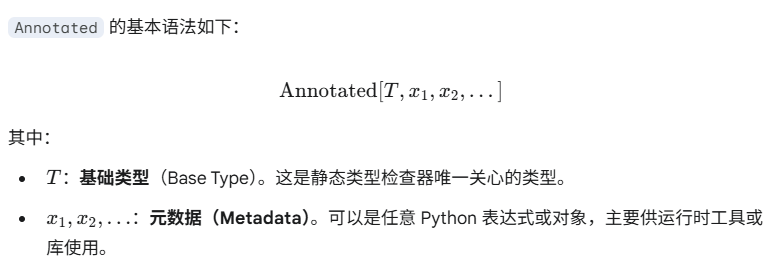
1.1. 静态类型检查器的工作方式
Section titled “1.1. 静态类型检查器的工作方式”对于静态类型检查器(如 Mypy),当它看到 Annotated[int, ...] 时,会 安全地忽略 所有元数据,只将其视为基础类型 int。
from typing import Annotated
# 静态类型检查器只将 UserId 视为 intUserId = Annotated[int, "这是一个用户 ID"]
def process_id(user_id: UserId) -> int:    # 静态检查器允许 user_id + 1    return user_id + 1
1.2. 运行时工具的工作方式
Section titled “1.2. 运行时工具的工作方式”运行时库(如 Pydantic、FastAPI、SQLAlchemy)可以访问并解析这些附加的元数据,并根据元数据执行特定的逻辑,例如:
- Pydantic:将元数据用作字段验证规则、默认值或模式生成。
- FastAPI:将元数据用作查询参数、路径参数或请求体的额外配置(如描述、默认值)。
- 其他库:用于自定义序列化、数据库映射等。
2. 语法细节和规则
Section titled “2. 语法细节和规则”- 参数数量限制:
Annotated必须至少有两个参数:一个基础类型和至少一个元数据项。Annotated[int]是 无效 的。
- 元数据的顺序:传递给
Annotated的多个元数据项的 顺序会被保留,并且对相等性检查有影响。 - 嵌套展平:嵌套的
Annotated类型会被自动展平(Flattened),元数据从最内层开始依次展开。Annotated[Annotated[int, 'A'], 'B']等价于Annotated[int, 'A', 'B']。
3. 经典应用场景:Pydantic 中的字段约束
Section titled “3. 经典应用场景:Pydantic 中的字段约束”Annotated 最广泛的应用之一是在 Pydantic (V2 及更高版本) 中,用来代替旧版本中的 Field 关键字参数。它允许你将验证约束直接绑定到类型上。
传统 Pydantic v1 风格:
from pydantic import BaseModel, Field
class User(BaseModel):    # 字段约束与类型提示分开    age: int = Field(..., gt=0, description="用户年龄,必须大于0")
使用 Annotated 的 Pydantic v2/v3 风格(推荐):
from typing import Annotatedfrom pydantic import BaseModel, Field
# 将 Field 对象作为元数据附加到 int 类型上PositiveInt = Annotated[int, Field(gt=0)]# 注:Field 本身也可以作为元数据传递其他配置
class User(BaseModel):    # 字段约束直接内联到类型中    age: PositiveInt
    # 也可以直接在模型定义中使用    name: Annotated[str, Field(max_length=50, description="用户名")]
3.1. 优点:创建可重用的约束类型
Section titled “3.1. 优点:创建可重用的约束类型”通过定义 PositiveInt 这样的类型别名,你可以在整个项目中重用这个带有约束的类型,而不需要在每个模型中重复 Field(gt=0)。
4. 如何在运行时获取元数据
Section titled “4. 如何在运行时获取元数据”要在运行时(在自定义代码或库中)访问 Annotated 中的元数据,你需要使用 typing 模块中的两个函数:
typing.get_type_hints(obj, include_extras=True):必须传入include_extras=True,才能获取到Annotated对象本身,而不是被剥离的基础类型。typing.get_args(annotated_type):用于提取Annotated中的参数列表。
from typing import Annotated, get_args, get_type_hints
def my_func(x: Annotated[int, "Min: 0", 100]) -> None:    pass
# 1. 获取包含元数据的类型提示hints = get_type_hints(my_func, include_extras=True)annotated_type = hints['x']print(annotated_type)# 输出: typing.Annotated [int, 'Min: 0', 100]
# 2. 提取参数args = get_args(annotated_type)base_type = args[0]  # intmetadata = args[1:]  # ('Min: 0', 100)
print(f"基础类型: {base_type}")print(f"元数据: {metadata}")Annotated 的作用是作为类型提示和运行时元数据之间的“桥梁”:
| 角色 | 作用 |
|---|---|
| 静态检查器 | 忽略 元数据,只检查基础类型的类型安全。 |
| 运行时库 | 提取并使用 元数据来执行特定的运行时行为(如验证、序列化、文档生成)。 |
| 开发者 | 创建可重用、语义更丰富的类型别名。 |
6.1. 版本兼容导入
Section titled “6.1. 版本兼容导入”| Python 版本 | 推荐的导入代码 | 说明 |
|---|---|---|
| Python >= 3.9 | from typing import Annotated | 直接从标准库导入,无需安装额外的包。 |
| Python < 3.9 (例如 3.8) | from typing_extensions import Annotated | 需要先安装 pip install typing_extensions。这是向后兼容的解决方案。 |